
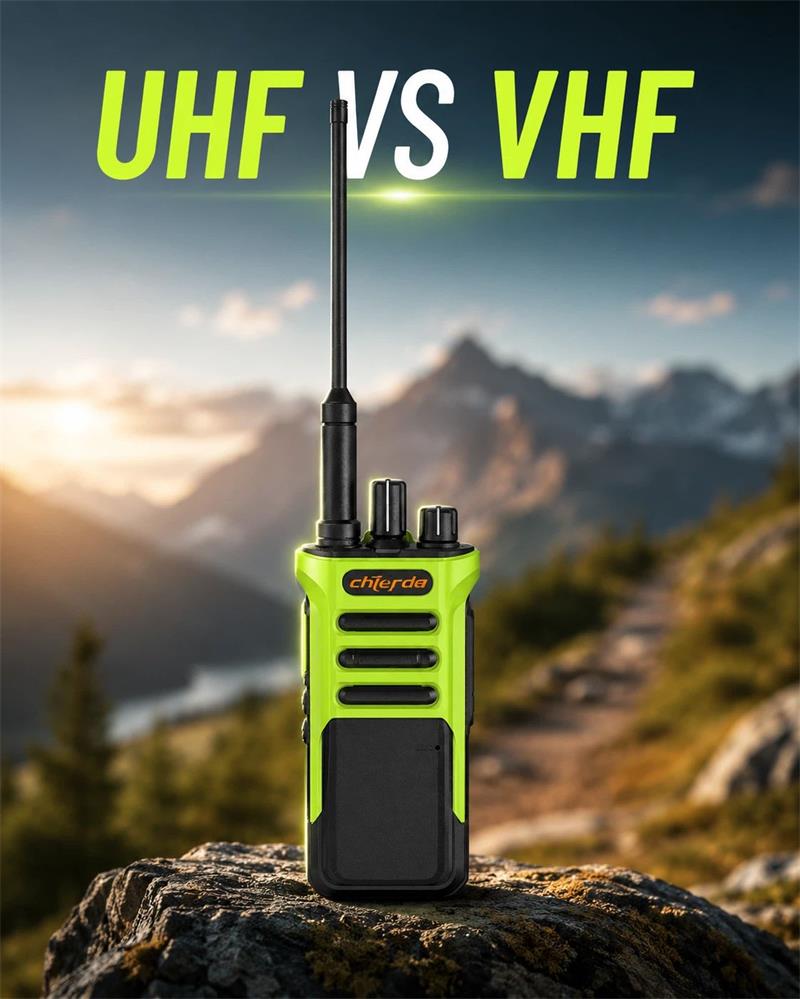
Before you buy a walkie-talkie, the seller will definitely ask whether you want a VHF radio or a UHF radio. But if you seem like a new beginner who is just using the walkie-talkie to keep in touch with your friends while you are hiking outdoors, then the seller will only recommend that you buy a license-free walkie talkie, which is also known as a UHF walkie talkie. Let’s delve into VHF and UHF frequency band to better choose the right walkie talkie in the future.
What is VHF and UHF?
VHF (Very High Frequency): This frequency range typically spans from 30 MHz to 300 MHz. VHF radios are generally used for long-distance communications, especially in open outdoor areas where there are fewer physical obstacles.
UHF (Ultra High Frequency): UHF radios operate on a higher frequency range, from 300 MHz to 3 GHz. UHF radios are more effective in environments with obstacles like buildings, walls, and other dense materials, making them ideal for indoor or urban use.
VHF vs. UHF: Key Differences
VHF and UHF have different performance in various geographical environments and situations. It is difficult to say which frequency band is better. Just say in which situations the band is better suited.
- SignalPenetration
One of the primary differences between VHF and UHF radios lies in how the signals penetrate. VHF signals travel further, especially in open, unobstructed areas. They can cover large distances and are ideal for rural areas, outdoor activities, and wide-open spaces like farms, parks, or wilderness regions.
UHF signals, on the other hand, are better suited for environments where there are more obstacles. UHF frequencies can penetrate walls, buildings, and other structures more effectively. This makes UHF radios the preferred choice for urban areas, construction sites, and other indoor settings, where buildings and obstacles may otherwise obstruct signals.
- Range and Coverage
VHF Radios: Since VHF signals travel longer distances in open spaces, they are often used for applications where coverage over large areas is essential. VHF radios are often used in applications like farming, forestry, and maritime communication.
UHF Radios: While UHF radios typically have a shorter range than VHF radios, they excel in dense environments. UHF radios are ideal for settings such as construction sites, shopping malls, and large office buildings, where obstacles like walls, floors, and other barriers can interfere with signal strength.
- Antenna and Size
Due to the lower frequency of VHF, the antennas tend to be longer compared to UHF radios, which results in larger devices. In contrast, UHF radios have smaller antennas and can be more compact, making them easier to carry around, especially for people who are hiking, climbing mountains,
- Interference and Channel Availability
VHF radios are generally less susceptible to interference from other electronic devices, which makes them ideal for areas where a lot of interference might occur. UHF radios, while effective in urban environments, are more vulnerable to interference from physical barriers like buildings or electronic equipment.
However, UHF radios usually have more available channels than VHF radios, providing better flexibility in crowded communication environments.
Usage
The decision between VHF and UHF largely depends on your specific needs and the environment in which you’ll be using the radios.
VHF radios: communicate over long distances in open, unobstructed areas like outdoor adventures, maritime operations, or large farms.
UHF radios: in urban settings or indoor environments where communication must penetrate walls, floors, or other physical barriers.
You need more available channels in a dense communication environment, like a construction site, hotel, or large event space.
Although VHF frequency is more suitable for outdoor use in the open areas, license-free radios (UHF radio) are generally recommended for outdoor enthusiasts. Why? License-free radios, whether they operate on PMR or FRS frequency, are in the UHF band and have a shorter communication distance. People choose to use because they don’t require any license and easy to operate.
Conclusion
Understanding the differences between VHF and UHF radios is essential when selecting the best walkie-talkie for your needs. While VHF radios provide greater range in open spaces, UHF radios are better suited for indoor use or areas with many obstacles. Both have their strengths depending on your environment and communication requirements, so make sure to choose the right type of radio to ensure clear, reliable communication.