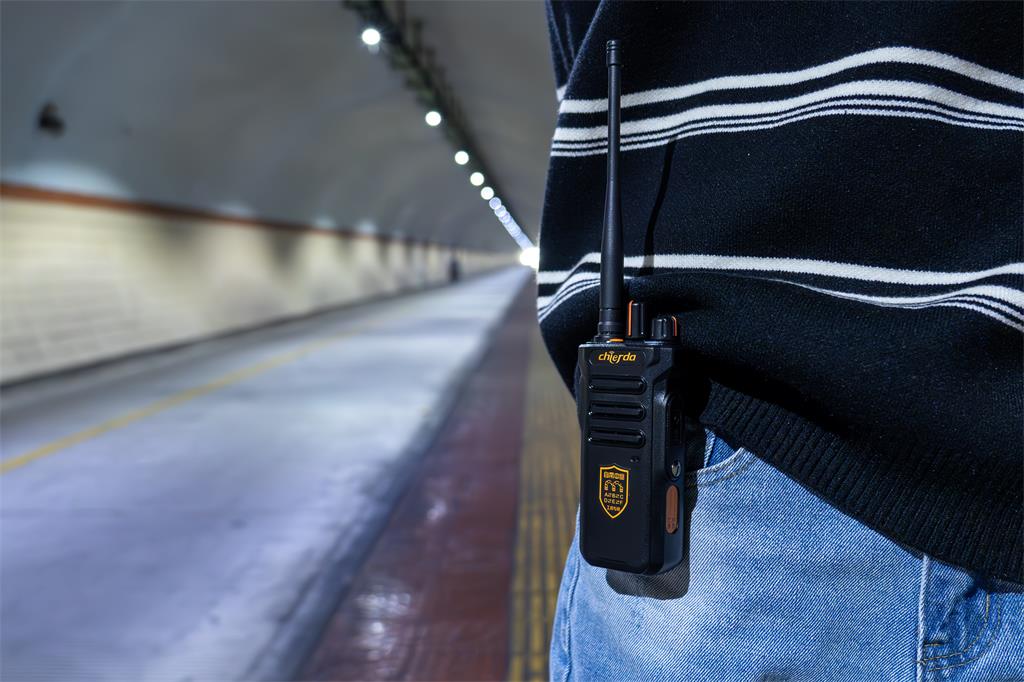
In signal-challenged environments like tunnels, basements, or remote job sites, traditional walkie talkies often fail. Relying on external repeaters or base stations are costly to deploy or impossible to install. The LoRa walkie talkie is a game-changing communication tool designed to solve connectivity gaps with built-in relay capabilities and mesh networking feature. What exactly is a LoRa walkie talkie? Why is it a must-have for teams working in enclosed or off-grid spaces? Let’s delve into it.
What is a Meshing Walkie Talkie?
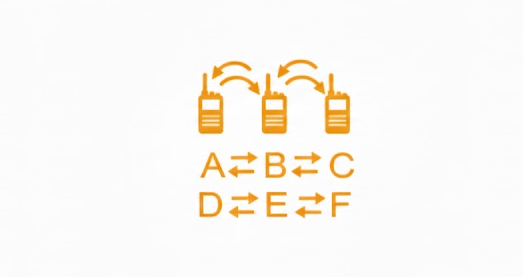
A LoRa walkie talkie (or mesh network two-way radio) is a portable communication device that eliminates the need for external repeaters or base stations. Each unit acts as both a transmitter and a relay node, allowing multiple meshing walkie talkies to form an adhoc meshing / relaying network. When one device sends a signal, it’s relayed through nearby units to extend coverage, penetrating obstacles, and ensuring connectivity even in areas with no existing infrastructure.
Key Advantages of Meshing Walkie Talkies
Built-in Relay Function: Every meshing walkie talkie works as a relay to retransmit signals between units without extra setup.
Automatic Networking: Turn on the devices, and they self-form a network in seconds. No manual setup, technical expertise, or pre-configured channels required. Compared with repeater, it is user-friendly.
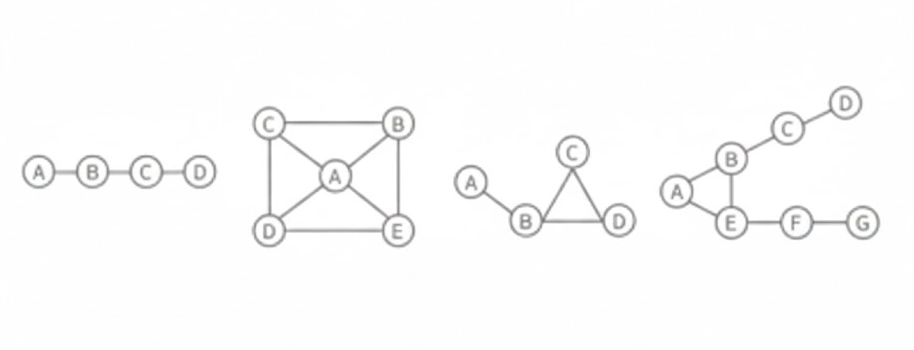
Multiple Networking Modes: Unlike traditional ‘star’ networks, like LoRaWAN, where devices are connected via single hop, a mesh network is like a web. Devices communicate with each other, relaying data across multiple devices in the network. Flexible enough for diverse scenarios, meshing walkie talkies support chain networking (linear signal relay), mesh networking (multi-node coverage), and tree networking (hierarchical signal distribution).
Why Meshing Walkie Talkies Outperform Traditional Radios?
Traditional walkie talkies depend on direct line-of-sight or external repeaters, making them useless in enclosed spaces like tunnels or basements. Meshing walkie talkies solve this by creating a dynamic “signal chain”: each unit picks up and retransmits signals, bypassing obstacles like concrete walls or long distances.
For teams in construction, mining, or facility management, this means no more “dead spots”, even deep in a tunnel or across multiple basement levels. The flexibility of chain, mesh, and tree networking modes also lets you scale the network as your team grows, without adding complex equipment. It is perfect communication solution for tight-budget organization.
Chierda T158pro: Digital Meshing Walkie Talkie for Underground Use
Chierda T158pro digital meshing walkie talkie takes self-networking communication to the next level designed specifically for tunnel and basement scenarios. With support for up to 30-hop centerless mesh networking, it extends the communication range up to 30 times farther without relying on a base station.
As a professional meshing walkie talkie, it supports automatic networking for multiple units and cascaded relay up to 30 levels—extending coverage exponentially in signal-dead zones.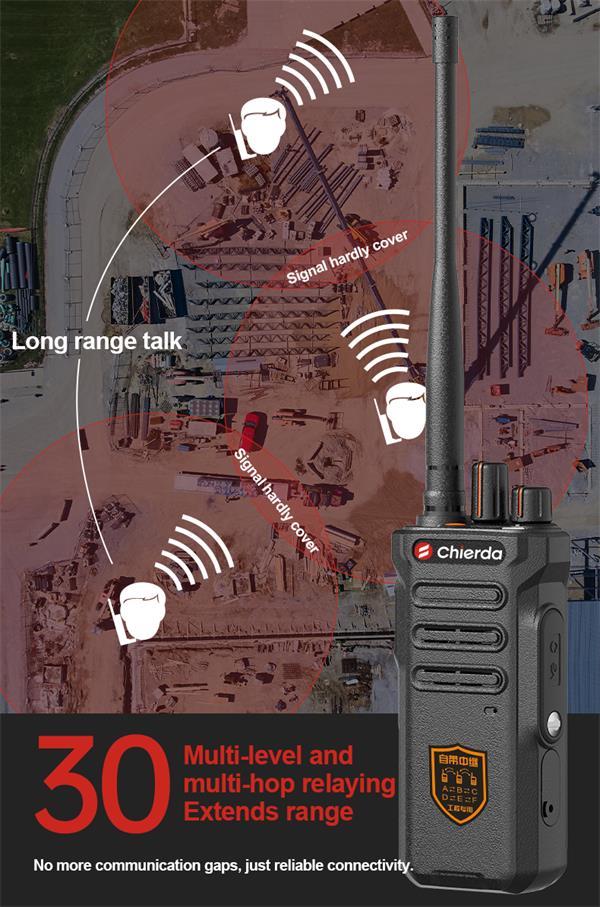
Whether you’re coordinating tunnel excavation crews or managing basement construction teams, the T158pro’s built-in relay and multi-hop networking ensure seamless connectivity. It requires zero setup. Power the devices, and they form a reliable network instantly, with signals relayed through 30 levels to reach every corner of your work site.